
Behind the Name
Volume 1
In case you haven’t noticed yet, CRAG-VT has been inspired recently by story telling. The Humble Schist documentary, the Moth-inspired story hour at the festival, and the brand new podcast Shooting the Schist are just a few examples. In this series, we will be sharing a collection of three stories behind Vermont’s route names sourced from the climbing community. Enjoy!
Wild Woman, Deer Leap (5.10a) – by Nick Goldsmith
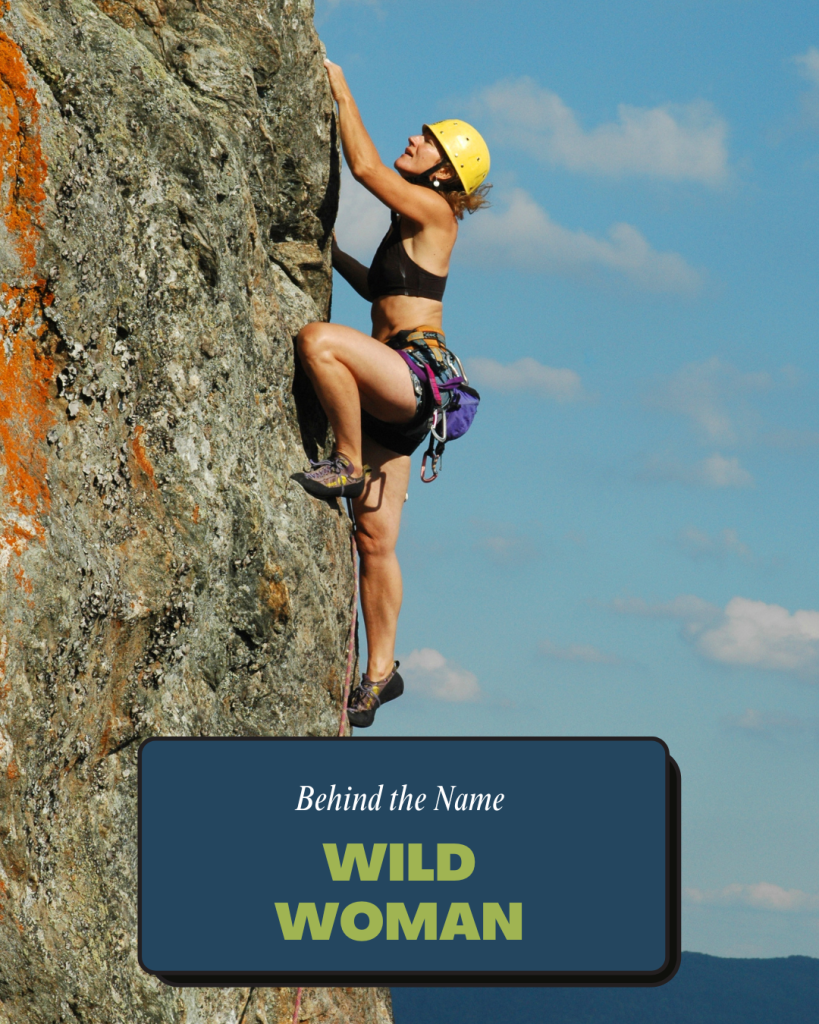
I should be telling the story of Celibacy, just to the right of this climb, but that is not allowed. This was in the days of ground-up hand drilling, and poor Isa was stuck belaying me as I tried to find a path up the cliff, sometimes taking 45 minutes to drill a single bolt.
On this day, I was stalled out about 25 feet off the ground and not making any progress. Isa was fed up with my weakness and demanded that I come down from that 5.7 and give her a shot at it.
Isa promptly floated through the crux move in ground-fall territory before getting in a good stopper and continuing on to the top of the cliff.
That 5.7 move in the wheelchair zone turned out to be 5.10, and she is, in fact, a Wild Woman. I went back up and hand-drilled a good bolt at the crux so that we could both enjoy leading the climb. Both of us have fallen on that bolt since then, at least once each.
Photo is actually from Celibacy; I can’t find a Wild Woman picture at the moment.
Henry Did It, Ethan Allen Tower (5.10ish) – by David Marvin
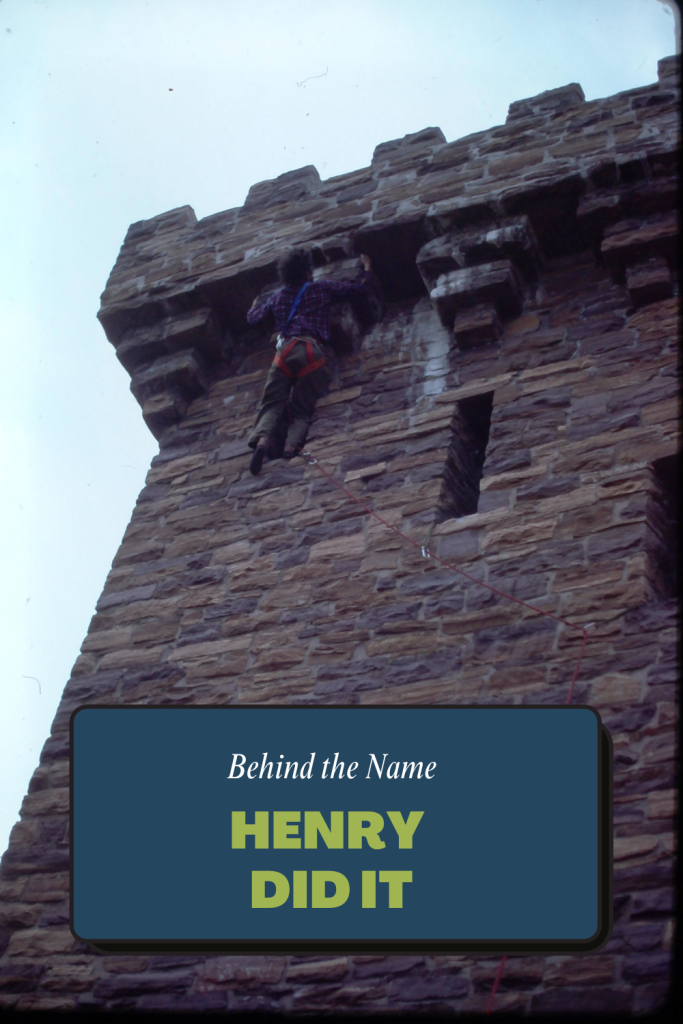
Around 1978, D J Bouyea, who lived in Burlington, had a project with his friend Nick to climb the Ethan Allen Tower in north Burlington. They had reached the point where they climbed the rough-cut stone lower tower using slings girth-hitched around a two-by-four railing inside the rectangular window slots. There were three of these which put you at the upper tower, which included an overhang and ten to twenty feet more of difficult face climbing to the top. Nick and D J had found a slot for a nut under the overhang; that was sketchy since it was between two mortared blocks of rock!
Buildering was popular at this point because there were no climbing walls, and Burlington, especially the UVM campus, had several excellent buildings with rough-cut stone for in-town workouts. Billings Center, Redstone Hall, and Converse Hall all provided great training terrain during classes. Freshman year I lived on the fourth floor of Converse Hall and we climbed with a rope into our window a couple of times from the ground level—very discreetly.
Nick lost interest in the project, so D J invited me to participate. We drove to the tower and D J invited me to give it a try, which by the way, in honor of “Hot Henry” Barber, he had named “Henry Can’t Do It.” The section up to the overhang was quite reasonable. When I reached the overhang and the funky nut protection, I experimented with several holds and ultimately decided I wasn’t willing to risk the fall onto the questionable protection. It seemed like the overhang was hard 5.10ish. I backed off and we went home. Too scary!
Later we got wind that Barber was visiting town as a climbing gear rep, so we conspired to invite him to the tower to see if he would lead it. Henry was one of the leading climbers in the world and extremely bold. He was intrigued, so we took him to the tower and offered him the lead. I have to admit I was impressed watching his approach. He climbed to the overhang, clipping all the bad gear, and carefully scoped the holds until he fully committed and solved the puzzle, topping out. D J and I realized then that we had to change the name; it turned out Henry could do it, hence it became “Henry Did It.”
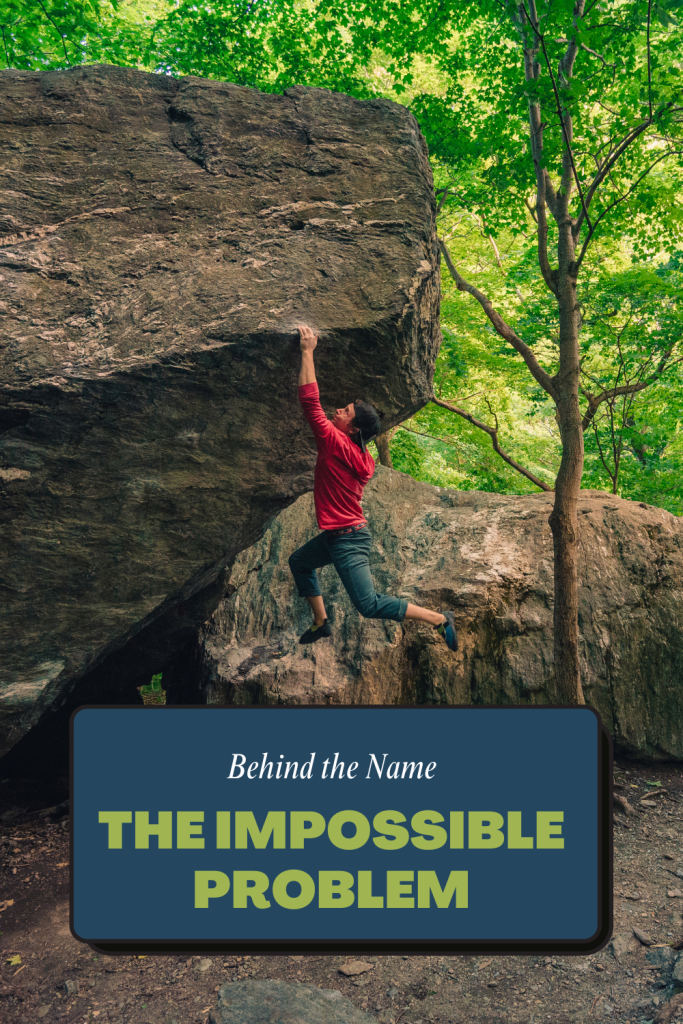
The Impossible Problem, Smugglers Notch (V8) – by Bill Patton
I hadn’t been in Vermont for very long and was still exploring the notch. I had worked my way through most of the named problems in the original (copier paper and spiral plastic binding) guide and was wandering around looking for something to do.
As I was exploring I came across the famous John Sherman and a few of the locals who were giving him a tour.
I tagged along as they pointed out some of the classic problems I had already seen.
The group worked their way around the corner of one of the larger boulders and excitedly pointed out a steep arete below a blank face. They explained that by gaining a pocket next to the arete they could dyno upwards and slap the blank looking face above. “After that it is impossible,” they said.
I think I sent it to the top on my second or third try. John Sherman muttered something about “who brought the f#@&ing strong guy” and walked away
The “the impossible problem” was born.
A few months later a beautiful photo of the problem appeared in a rock and ice climbing calendar and suddenly the obscure little bouldering area called Smuggs was on everyone’s radar.
(More recent photo by Ted Shiele since Bill claims the FA was before the invention of the camera.)
Have a Behind the Name story? Share it here: https://tinyurl.com/mrsvz3cd
